

Wondering how to make a small home look bigger? A small home can feel more spacious without a renovation. The most effective starting points are a clear layout, generous light, appropriately scaled furniture and fewer visual interruptions. You do not need to paint everything white or buy an entirely new furniture set.
Whether you live in a studio apartment, a compact house or a rental, these 13 approachable ideas will help you create a brighter, calmer and more functional interior.

Quick Answer: How to Make a Small Home Look Bigger
To understand how to make a small home look bigger, start with clear sightlines and a layout that supports daily life. Keep main walkways clear, allow daylight into the room, choose furniture that fits the space, use vertical storage selectively and simplify visible surfaces. A coordinated palette and layered lighting can make separate areas feel more connected.
13 Practical Ideas: How to Make a Small Home Look Bigger
Before trying every suggestion, choose the room that causes the most frustration. Take a photograph from its doorway and identify what first catches your eye: a blocked window, crowded floor, dark corner or overloaded shelf. Make one change at a time and compare the result. This simple process helps you avoid buying decorative items that do not address the actual problem. Your aim is not an empty showroom, but a comfortable home with clear movement, useful storage and space for the things that matter.
1. Start With the Layout, Not the Decorations
One of the easiest ways to make a small home look bigger is to improve movement through each room. Before buying anything, stand at the entrance and identify the natural walking route. Move furniture that blocks it, keep windows visible, and remove pieces that do not serve your routine. In a compact living room, one practical side table may work better than several scattered accent tables.
2. Let Natural Light Reach Further
Natural light is central to how to make a small home look bigger without structural changes. Keep tall furniture away from windows where possible, clean window glass, and use curtains that can be pulled fully aside. If privacy matters, pair sheer curtains with blinds rather than permanently blocking daylight.
3. Position Mirrors With Intention
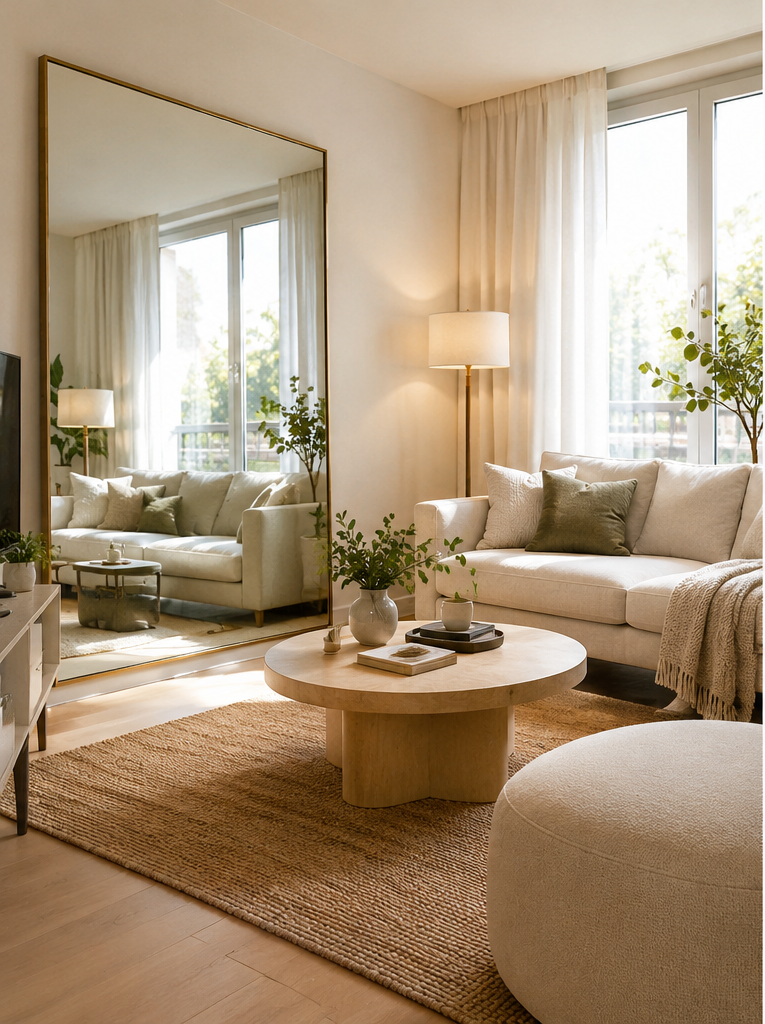
If you are exploring how to make a small home look bigger on a budget, try repositioning an existing mirror first. A mirror can reflect daylight and extend perceived depth. Place it opposite or adjacent to an attractive, uncluttered view; a mirror facing messy shelves may simply duplicate the clutter.
4. Create a Connected Color Palette
Choose a main wall color, a supporting neutral and one or two accent colors. Warm white, light wood and muted olive are one possible combination. Dark paint can also work in small rooms when the lighting and surrounding finishes are considered.
5. Choose Furniture That Reveals the Floor
Exposed sofa legs, floating shelves and open-frame tables can feel visually lighter than solid, bulky pieces. Measure furniture and mark its footprint on the floor with removable tape before purchasing.
6. Let Big Pieces Do More Than One Job
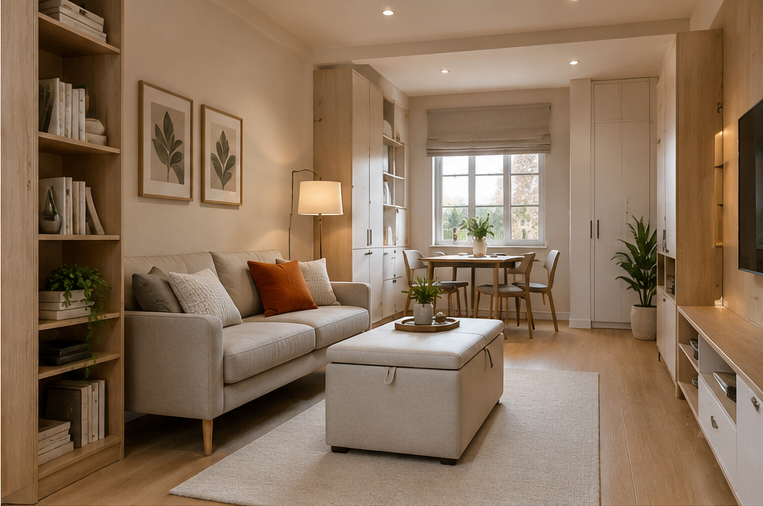
Look for storage ottomans, beds with drawers, extendable dining tables or nesting tables when those functions genuinely match your lifestyle. Multifunctional furniture helps reduce the number of separate pieces you need.
7. Use Vertical Storage Without Filling Every Wall
A tall narrow bookcase, wall hooks or shelves above a desk can free floor space. Keep everyday items easy to reach, secure heavy furniture appropriately, and leave some wall area open to avoid visual overload.
8. Give Each Room One Focal Point
Choose an artwork, sofa, headboard or light fixture to draw attention. Several competing gallery walls, patterned furnishings and ornaments can make a small space feel busy; let supporting pieces stay quieter.
9. Hang Curtains Higher Where Appropriate
A curtain rod positioned above the frame can draw the eye upward, while extending it beyond the sides lets curtains clear the window when open. Match fabric and lining to the room’s privacy and light-control needs.
10. Layer Lighting Beyond the Ceiling Fixture
Combine general ambient light with task lighting for reading or working and a smaller accent lamp for dark corners. Plug-in and rechargeable options can be useful in rental homes without changing wiring.
11. Edit Belongings Before Buying Organizers
Learning how to make a small home look bigger often starts with reducing visible clutter rather than purchasing more organizers. Sort items into regularly used, occasionally used, stored elsewhere and donate/recycle groups. Closed drawers hide visually busy supplies, while carefully edited open shelves can display a few favorites.
12. Define Zones Without Blocking Sightlines
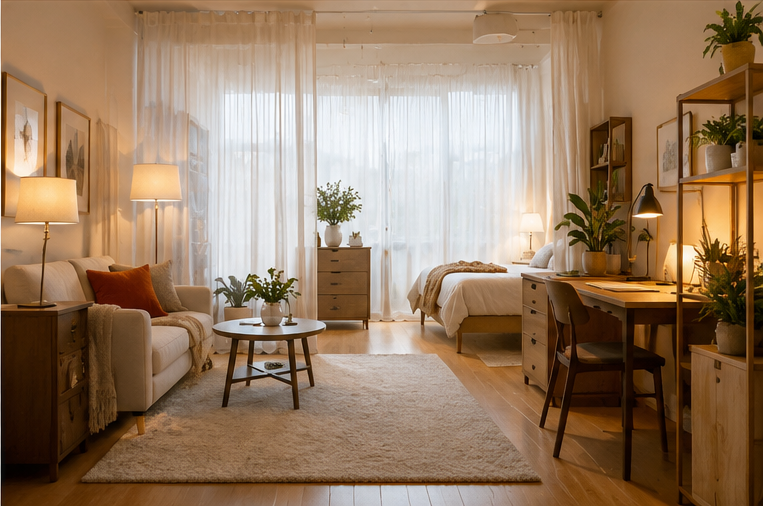
Use a rug to anchor a seating area, a slim desk to mark a work corner or a lamp to define a dining spot. In studio apartments, repeat materials or colors across zones to keep the interior connected.
13. Leave Some Space Intentionally Empty
You do not need to decorate every surface or fill every corner. Clear one tabletop and return only the useful or meaningful items. Breathing room makes furniture easier to appreciate and daily life easier to manage.
How to Plan a Small-Space Refresh Without Renovating
Measure before you move furniture
Sketch the room and mark doors, windows, radiators and electrical outlets. Measure the width of walkways and note which cabinets need room to open. A furniture arrangement can look attractive in a photograph but still be frustrating if it interrupts daily movement. Test a new layout with painter’s tape before lifting heavy pieces or ordering furniture.
Choose changes that solve two problems
Prioritize ideas that improve both appearance and function. For example, a storage ottoman can replace a separate coffee table and basket, while a wall-mounted lamp can free space on a narrow bedside table. Avoid adding shelves simply because a wall is empty: leave breathing room around the pieces you already enjoy.
Evaluate the room at different times of day
Observe how daylight enters in the morning and afternoon. Then switch on your usual lamps after sunset. A corner that feels open at noon may look gloomy in the evening. Position task lighting where you actually read, cook or work, and use softer accent lighting to balance the rest of the room.
How to Make a Small Home Look Bigger This Weekend: Five Changes
- Move a piece of furniture that blocks a walkway.
- Clear the area around your main window.
- Remove excess objects from one visible surface.
- Reposition a mirror to reflect daylight or an uncluttered view.
- Measure your room before purchasing any new storage or furniture.
Small Home Decorating Tips for Renters
Renters can make meaningful improvements without permanent construction. Try freestanding storage, washable rugs, tension-mounted window treatments where suitable and plug-in lamps. Check your lease before hanging heavy objects or making holes. A removable solution is only useful when it is safe for the surface and installed according to its instructions.
Keep your design flexible
Choose a few adaptable pieces that can move with you, rather than purchasing furniture tailored to one awkward corner. Neutral foundational pieces can work with changing accents such as cushions, artwork and throws. When your storage needs change, reorganize what you own before assuming you need another cabinet.
Common Mistakes That Make Small Rooms Feel Crowded
Buying without measuring: Even attractive furniture can interrupt circulation. Using too many tiny pieces: Several small tables may create more clutter than one well-proportioned option. Overloading open shelves: More storage is not automatically a calmer look. Relying on one ceiling light: Dark corners can make a room seem enclosed. Decorating every inch: Some empty space is a design choice, not a problem to fix.
Frequently Asked Questions
What makes a small home look bigger?
Good natural light, open sightlines, a functional furniture layout, a consistent palette and reduced clutter can make a small home appear more spacious.
What color makes a small room look bigger?
Light neutrals can create an airy look, but there is no single required color. Consistent finishes and appropriate lighting often matter more than choosing a particular shade.
Can dark furniture work in a small living room?
Yes. Balance darker furniture with adequate light, lighter surrounding surfaces and enough visible floor area.
How can I make a small apartment feel bigger on a budget?
Start by rearranging furniture, clearing visible clutter, opening window areas and repositioning a mirror before buying anything new.
Should I use large or small furniture in a compact room?
Choose pieces proportionate to the room and your needs. A few correctly sized pieces can work better than numerous small items.
The Bottom Line
For further ideas on room layouts and lighting, consult Houzz home design guides and Apartment Therapy. Compare any recommendations with your own room measurements and needs.
Ultimately, how to make a small home look bigger is less about disguising its square footage and more about using it thoughtfully. Begin with the room that feels most crowded, make one practical change and build from there.
For more ideas, explore our Small-Space Living, Home Décor and DIY & Hacks sections.


[…] 13 Clever Ways to Make a Small Home Look Bigger (Without Renovating) […]